Deepiction
A tool that pulls a person's digital footprint together from every platform, translates it into something readable, and hands back the controls.
The project ran in the sixth semester, five of us across two universities: three designers at the HfG, two developers at Aalen University. The idea was to make your own data readable again — without building yet another platform that collects data itself.
Main project at HfG Schwäbisch Gmünd, University of Design, in cooperation with Aalen University
March – July 2021
Prof. Hans Krämer
UX design, UI design, Motion design, Concept, Research
Everyone generates data. Almost nobody can read it.
The GDPR gives everyone the right to ask a platform for their data. What comes back is a raw export — thousands of lines of JSON, unstructured and unexplained. The right exists; the understanding does not.
- No real sense of security about what happens to personal data
- Almost no education about how that data is processed
- Filter bubbles quietly remove both the overview and the choice
- The legal right to your own data returns files nobody can read
A survey, three experts, and real data exports.
We ran our own survey well beyond the school's bubble and interviewed users alongside three experts. Several participants requested their real exports from the platforms and let us work with them — which is how we learned first-hand how unreadable those files are. Two personas came out of the testing, a Hardliner and a Softliner; designing for both is what kept the tool from turning into a privacy lecture.
- Andrew HillFounder, Textile Photos — decentralised data infrastructure
- Marcus GelderieProfessor of internet security, Aalen University
- Michiel Top & Vivien RoggeroCEO and CTO, Your Digital Self — a startup building almost exactly this
Six ideas, tested separately, merged into one.
We built and tested six directions rather than arguing about them — a timeline, a data visualisation, data management, a browser plugin, an open question box and an avatar. A weighted matrix settled it: the avatar drew the most interest, data management answered the most need. Instead of picking a winner we kept the strongest part of each, and built against two questions.
What has been said about me online?
Which party would I vote for in the next federal election, judging by my data?
The second is the sharper of the two. It takes a single sentence to show how far everyday data can be read.
A translator, not another platform.
Non-profit, funded by donations — no data sales, no advertising. Four values sit on the login screen: autonomy, transparency, responsibility, security. The interface is deliberately calm and explanatory rather than alarmed.
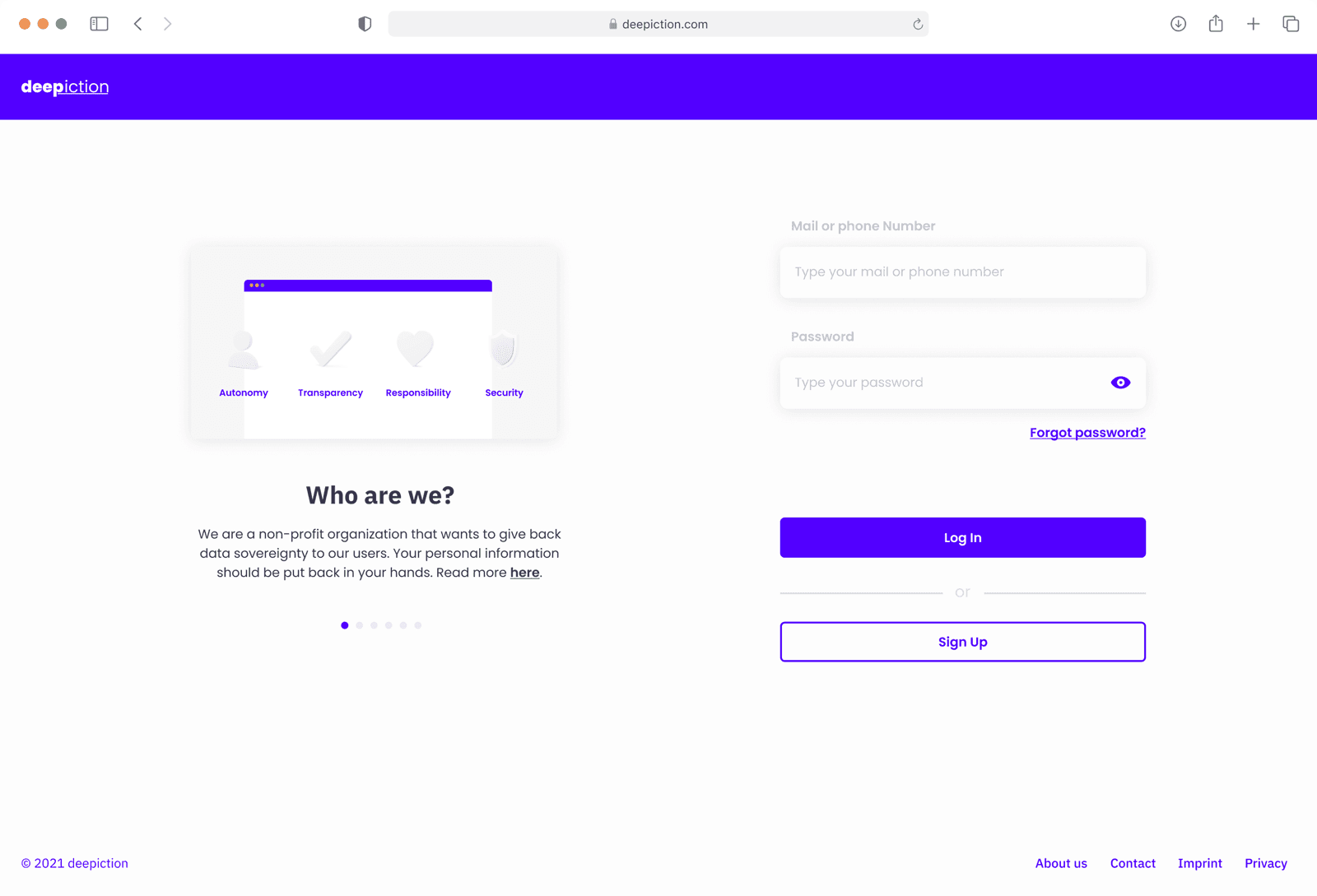
Registration
Registration without OAuth, deliberately. A “sign in with Facebook” button would reproduce the exact access pattern the tool argues against, so data is uploaded instead, encrypted and decentralised.
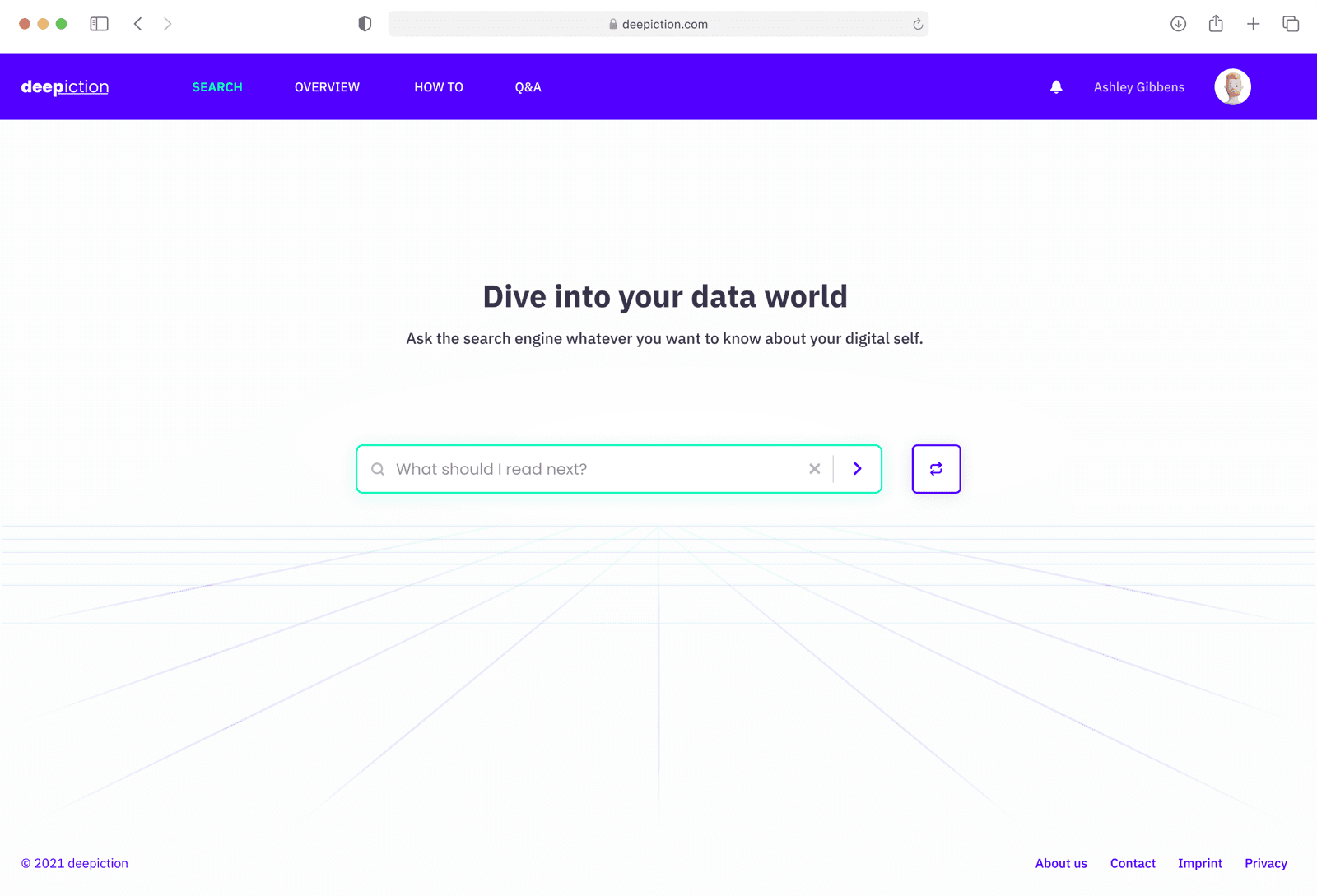
Search
A single text field. Ask a question about yourself; the answer is searched in your own uploaded data.
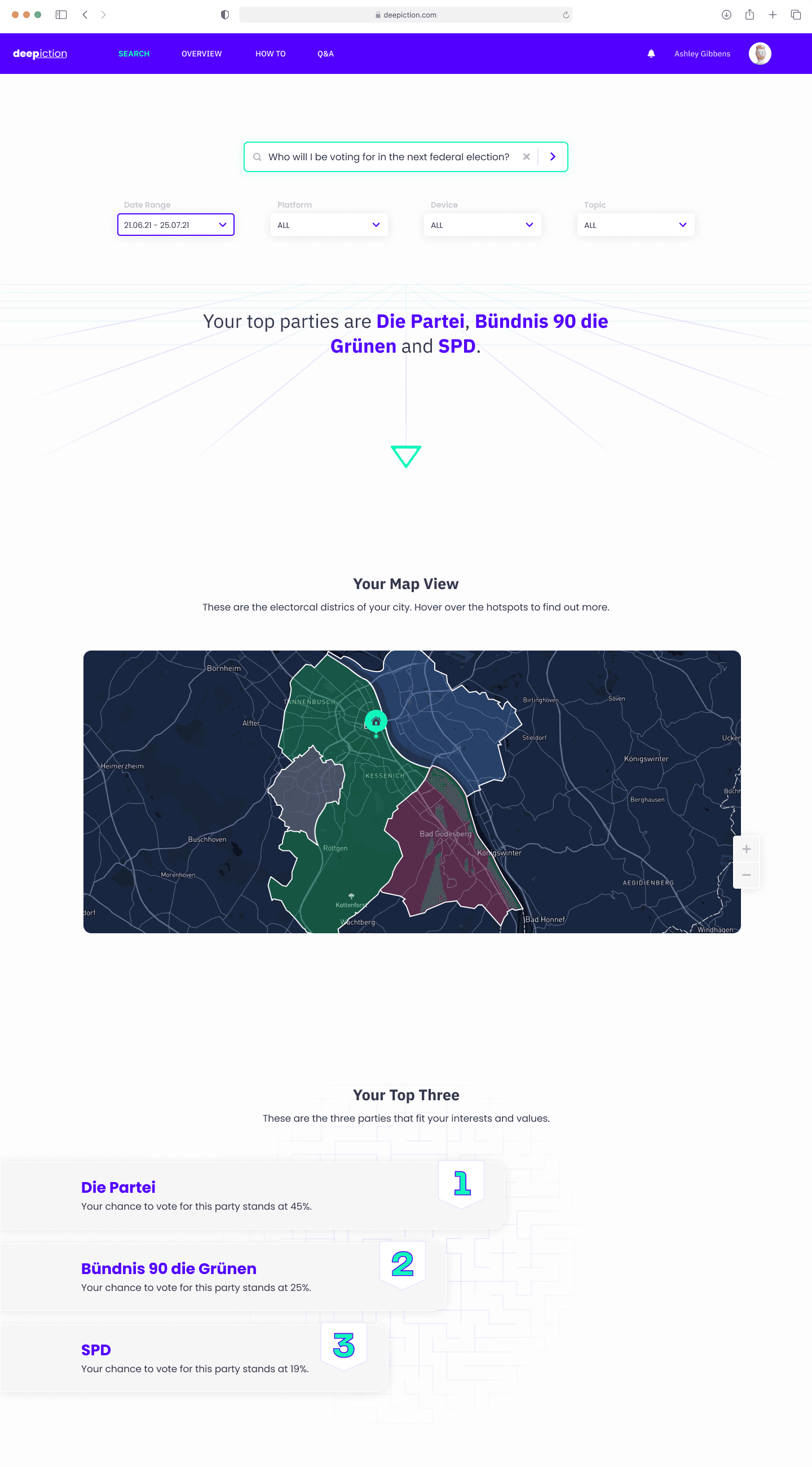
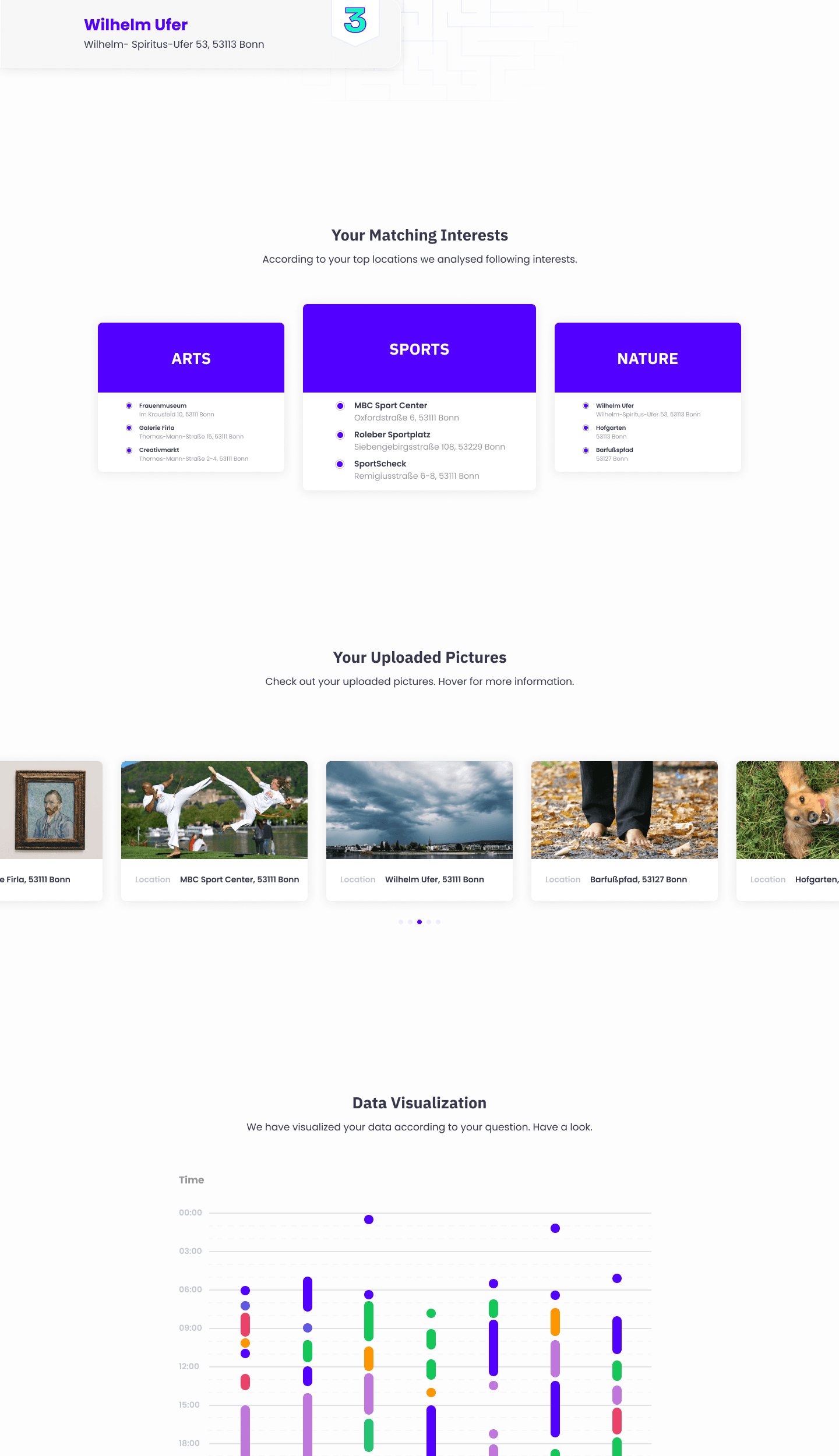
Result pages
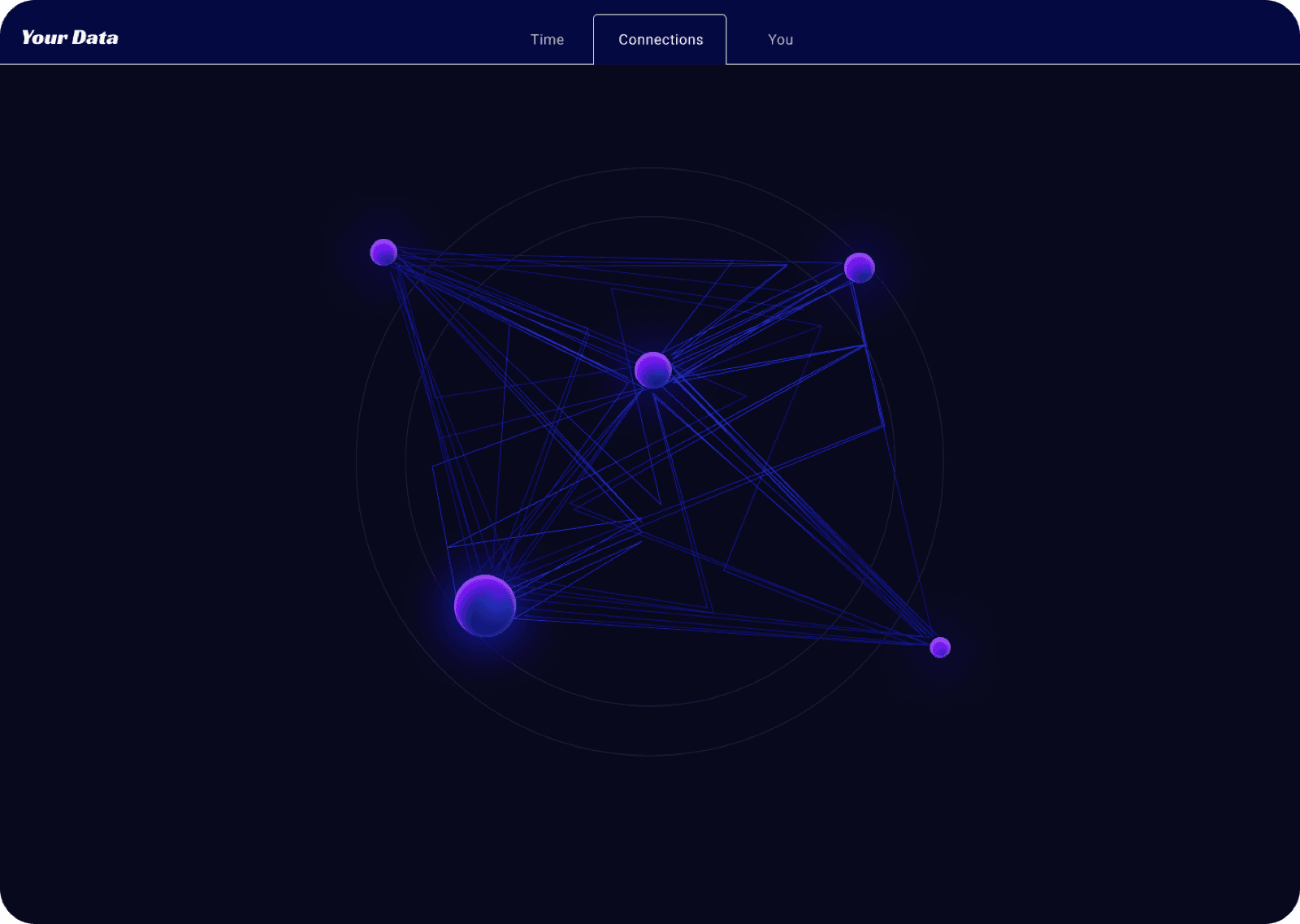
Result pages per use case: a map, a top three, matching interests, a data visualisation and a timeline of your own actions.
Privacy settings
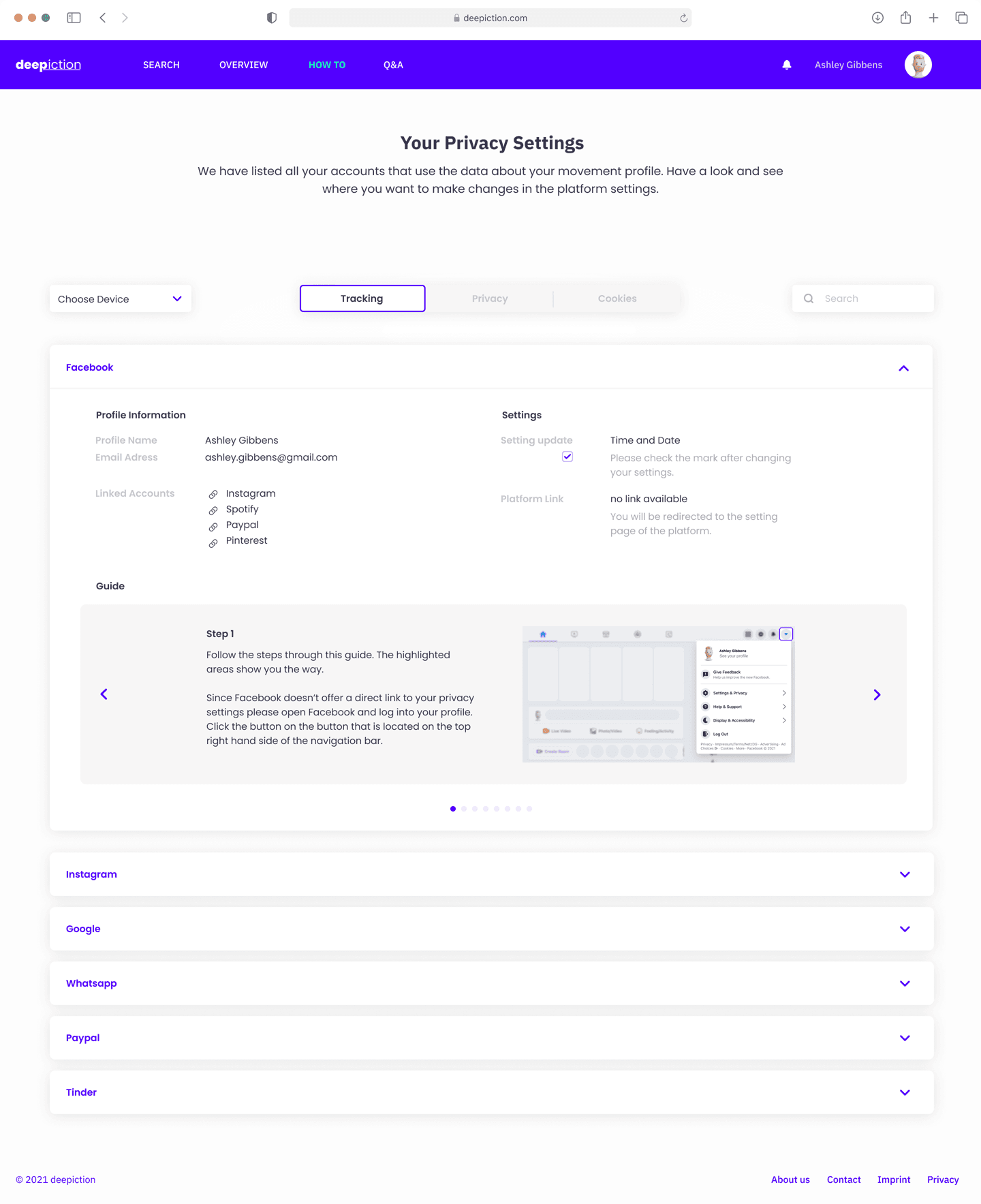
Guided privacy settings per platform, step by step — because almost no service links directly to the settings that matter.
The overview
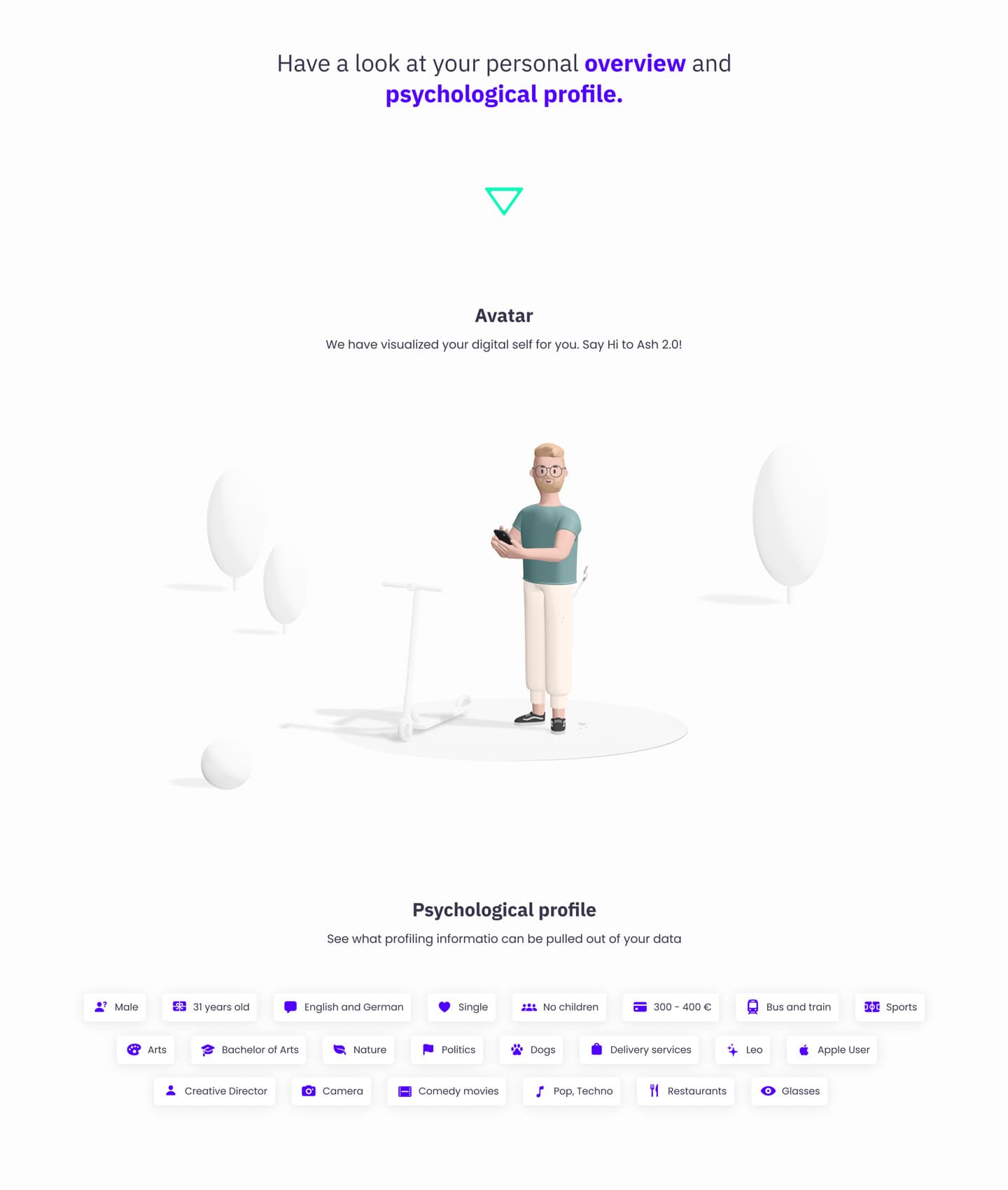
A dashboard: your psychological profile as a tag cloud, a 3D avatar, and how much data each platform holds.
Explaining itself
Q&A pages explaining the tool, the organisation behind it and the data world it operates in.
It ran, and it was tested.
Two teammates at Aalen University built a Node.js backend with a full-text search over a synthetic dataset drawn from ten sources, designed to answer exactly those two questions. My part was the interface and the translation between design and build. We then ran a usability lab session in front of about twenty people; I moderated.
- The registration flow built too little trust, and its steps looked too alike
- Posting a master password by mail read as old-fashioned
- The filters needed far more visual weight to be found at all
What we learned, including the awkward part.
Halfway through the research we found Your Digital Self — a startup building a data wallet on almost exactly our premise. We interviewed their CEO and CTO rather than quietly changing course; they offered a collaboration, which we turned down for the semester and left open for afterwards. Finding out that your idea already exists, and talking to the people who got there first, taught us more than another round of sketching would have.
- Hana AmerHfG Schwäbisch Gmünd
- Jasmin KlementHfG Schwäbisch Gmünd
- Alina SchadtHfG Schwäbisch Gmünd
- Anjan BösingerAalen University
- Tobias WörnleAalen University
Supervised by Prof. Hans Krämer · “User Driven (Product) Design Development”, summer semester 2021, in cooperation with Aalen University.